The closure of the de minimis loophole – which went into effect at midnight – stops the descent into eCommerce lawlessness characterized by the rise in platforms like Temu and Shein, and the fact that judgment-proof overseas retailers now make up the majority of vendors on Amazon’s U.S. store.
The findings refute claims by the pharmaceutical lobby that tariffs would harm consumers, and instead underscore the urgent need for strong trade measures to reshore U.S. production of essential medicines.
The Congressional Budget Office (CBO) upped the ante on their estimate for fiscal deficit reduction last week, all due to higher tariffs that kicked into effect this month. Tariffs are offsetting tax cuts signed into law this summer in the One Big Beautiful Bill (OBBB).
America is dangerously reliant on high-risk foreign suppliers for essential generic drugs, especially APIs concentrated in China and India. That over-reliance has already triggered preventable crises, such as nationwide chemotherapy shortages when a single overseas plant shut down.
It’s been three full months of record-high tariffs, and yet rolling 12-month overall inflation came in at 2.7% in July, the same percentage rate as June, according to last week’s Bureau of Labor Statistics (BLS) inflation report. Core inflation (CPI), which excludes food and oil, rose 3.1% in July, up from 2.9% in June.
The inclusion of these steel products in the Section 232 tariff program will mean more jobs, more Made-in-the-USA, and help provide steady-order volume to our primary steel producers.
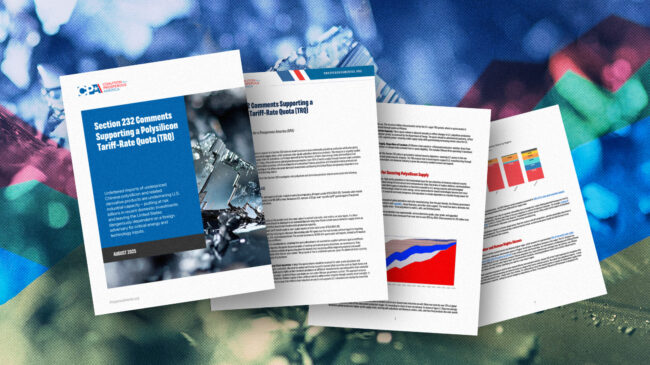
The domestic polysilicon supply remains a national security imperative for the United States for many reasons including: China’s link to forced labor and human rights abuses; a globalized Chinese Communist Party-subsidized solar industry leading to overcapacity and export dumping; and the limitations of U.S. trade remedies to help, deep into the solar supply chain.
Investigation follows formal petitions filed last month by The Alliance for American Solar Manufacturing and Trade, in response to market manipulation driven by predominantly Chinese-owned manufacturing companies operating in Indonesia, and Laos, as well as those headquartered in India.