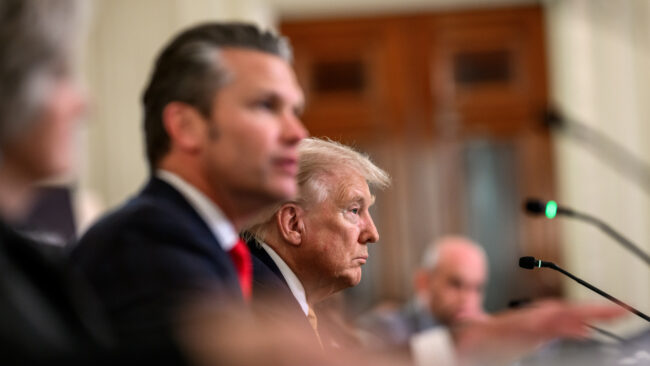
A Sept. 2 House Ways & Means Committee hearing on critical minerals had both members and witnesses suggesting that countries the U.S. relies on for these hard-to-mine, harder-to-process minerals be granted trade preferences.
The July goods deficit hit a record for the year at $119.59 billion, according to Thursday’s data from the U.S. Bureau of Economic Analysis (BEA). If oil and gas export values are removed, the goods gap with the world for July comes in at $128.55 billion.
Mexico’s top trade diplomat, Marcelo Ebrard, was in Washington for several days last week [from Aug. 24 to Aug. 26] but quietly left empty handed on Wednesday.
Despite foreign currency gains against the dollar in top trading partners like Mexico, Vietnam and China, import values for goods came in at $309.01 billion. That is the second highest import value of the year following May’s $316.86 billion surge, the Bureau of Economic Analysis said on Tuesday.
The Committee hearing on shipbuilding took place on July 22. Like everything else tied to global trade, China competition was the impetus to building a shipbuilding and modern port infrastructure industry domestically.
Companies making goods from the Department of War (DoW) will now need much clearer visibility into their supply chains, especially if a product they make or buy includes critical minerals.
Former member of the Federal Reserve Board, Stephen Miran, did not waste much time post-government to come out publicly in favor of tariffs. In a June 28th thread on X, Miran made the market case for tariffs – centered on the “optimal tariff,” failed economic models, and revenue tariffs to curb or cut taxation.
The House Select Committee on the CCP’s recent hearing about China’s economic espionage and corporate influence in the U.S. suggests the Committee is taking China corporate investment here as a potential problem.




![Mexico’s top trade diplomat, Marcelo Ebrard, was in Washington for several days last week [from Aug. 24 to Aug. 26] but quietly left empty handed on Wednesday.](https://prosperousamerica.org/wp-content/uploads/2026/09/claudia-sheinbaum-650x366.jpg "claudia-sheinbaum")