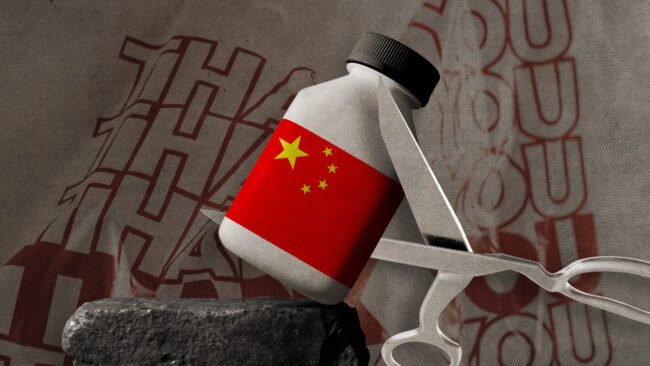
Witnesses at a Senate hearing on Wednesday, Oct. 29 titled “The Future of Biotech” discussed ways to facilitate reshoring and making it attractive to expand in the U.S. and conduct R&D here instead of in China.
There are very few things that Democrats and Republicans agree on. One of them is the need to support domestic shipbuilding beyond just military vessels.
CPA’s chief economist emeritus, Jeff Ferry, has gone back to school in his semi-retirement years. This time, though, it was a speaking gig at the University of Florida’s new Semiconductor Institute in Gainesville.
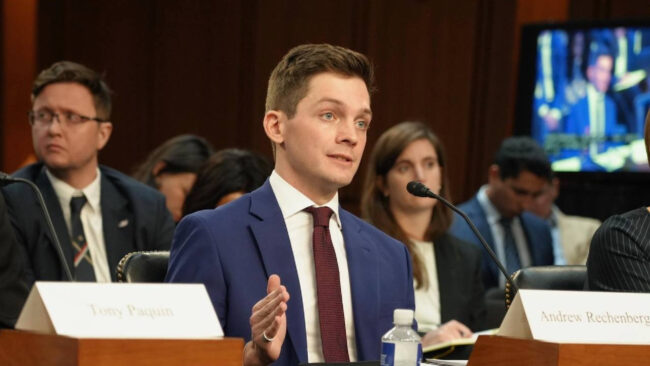
CPA Economist Andrew Rechenberg gave his testimony and answered questions in a four- panelist hearing. It was arguably the most agreeable hearing in years. A bipartisan consensus on America’s generic drug supply chain is nearly fully formed now.
The Trump administration’s Section 232 investigation into pharmaceutical imports is reportedly close to being final. The final investigation’s success will depend largely on whether or not the Commerce Department determines that there is a crisis in the generics industry — an issue that President Trump highlighted back in 2023.
As proof that no company can match China on price, Chinese producers of active pharmaceutical ingredients (APIs) and the key starting materials (KSMs) used to make them are slashing prices by up to 50%. Not even low-cost India – one of the largest importers of Chinese KSMs – can compete at those levels.
For the second time in less than two months, the CEO of a publicly traded company admitted that tariff cost burdens will not be passed down fully, if at all, to consumers. With one CEO saying tariffs were too low.
The trade deficit rose 32.5% in July and imports were up 5.9%, but much of this can be attributed to importers bulking up on orders as the full brunt of the “Liberation Day” tariffs were set to start in August.
The Congressional Budget Office (CBO) upped the ante on their estimate for fiscal deficit reduction last week, all due to higher tariffs that kicked into effect this month. Tariffs are offsetting tax cuts signed into law this summer in the One Big Beautiful Bill (OBBB).