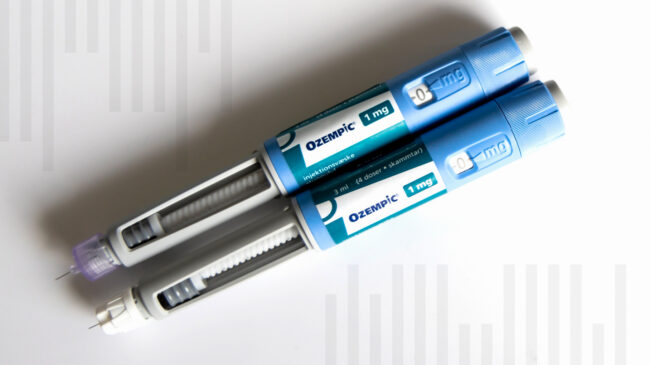
Last year, Americans spent more than $15 billion on Novo Nordisk’s diabetes and weight-loss drugs Ozempic and Wegovy. The active ingredient in both treatments — semaglutide— has rapidly become one of the world’s most commercially successful medicines.
On Capitol Hill, the defense narrative clearly gets legislators’ attention. It remains the surest way to get Members of Congress thinking about reindustrialization and rebuilding domestic supply chains.
It was no surprise that the 2025 goods deficit broke another record, the Bureau of Economic Analysis (BEA) numbers showed recently. The year-ending goods deficit was $1.24 trillion, up from $1.21 trillion in 2024, with the monthly deficit for December looking like historic averages, nearly $100 billion. Nothing seems to stop America’s appetite for imports.
CPA urges the administration to move swiftly to deploy Section 232 investigations through the U.S. Department of Commerce as the most durable and effective tool available to restore American industrial capacity.
President Trump has made American reindustrialization and reshoring central to his economic policy agenda. Reviving American manufacturing enjoys broad public support and has increasingly become a bipartisan priority.
The Senate Finance Committee agrees on two things: First, the U.S. Mexico and Canada Agreement (USMCA) isn’t perfect and a number of issues need fixing. Second, they don’t want tariffs.
CPA strongly supports Senator Cassidy and Whitehouse’s Last Sale Valuation Act because it closes a long-standing loophole that has allowed multinational importers to artificially understate the value of goods entering the United States.
This Interim Agreement framework reflects a long overdue acknowledgment that essential medicine supply chains cannot be left to foreign dominance, particularly by India or an adversary like China.
Zydus Pharmaceuticals, one of India’s largest generic drug makers, recalled over 22,000 bottles of a cholesterol medication on Dec. 30, 2025. AvKare, a Tennessee-based pharmaceuticals distribution company that relies on imports, recalled around 7,900 cartons of Rosuvastatin, a widely used generic statin, a day later.