The development of GTAP-USL economic model marks another step forward in our efforts to make the GTAP more realistic and a better predictor of the real-world effects of trade policies or trade shocks. It’s critical to build models that provide a better understanding of how policies impact people, families, racial groups, gender, cities and regions. There is still more work to be done.
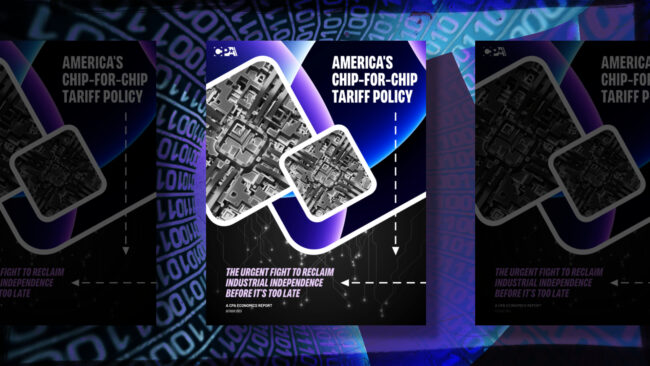
The report, titled “America’s Chip-for-Chip Tariff Policy: The Urgent Fight to Reclaim Industrial Independence Before It’s Too Late,” finds that the United States now produces only 10 percent of the world’s chips—and almost none of the most advanced ones—while China has captured the majority of global capacity for legacy chips, the mature semiconductors essential to cars, medical devices, and industrial equipment.
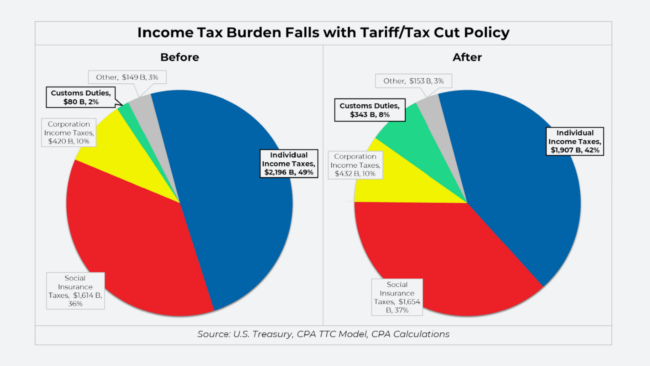
A 10% “universal” tariff on all U.S. imports, combined with a schedule of income tax cuts would generate economic growth of $728 billion and 2.8 million additional jobs, according to the CPA economic model of the U.S. economy.
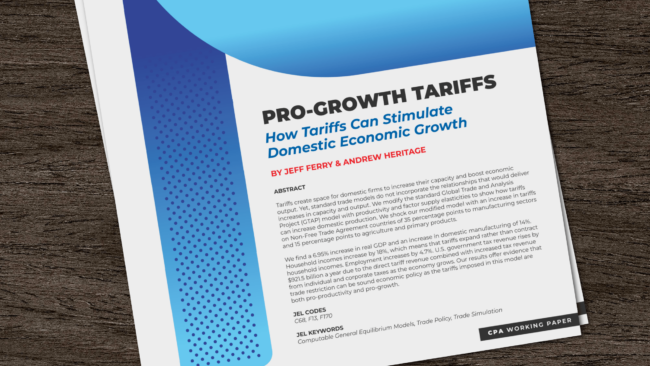
Key Points The standard widely-used trade model, GTAP, has been wrong in its forecasts of every major U.S. trade agreement. CPA economists have modified the
Note: This version is updated with results for additional tax revenue and a retaliation scenario. Key Points CPA modeled former President Trump’s recent proposal regarding
Executive Summary The CPA Reshoring Index is the first and only measure of U.S. producers’ share of the U.S. domestic market for manufactured goods. It