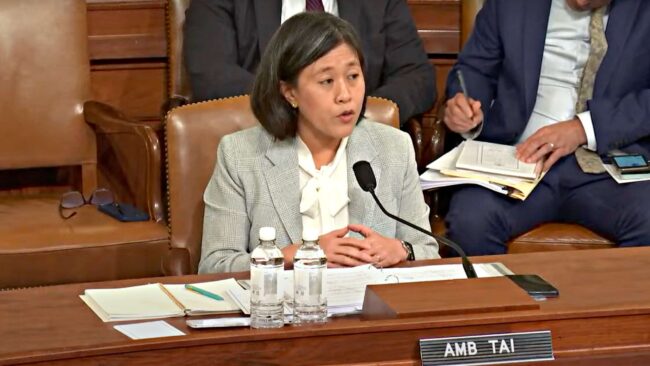
USTR Katherine Tai sat for a two hours-plus hearing with the House Ways and Means Committee on Tuesday to discuss trade matters and was met early on by some staunch criticism.
Tariffs that began in 2018 have not destroyed the U.S. economy. The stock market did not crash. Tariffs weren’t the cause of inflation either. And many manufacturing industries from kitchen cabinets in Alabama to solar in Ohio are thriving because of them.
“Our tax code is supposed to support American manufacturers in building out genuine domestic supply chains. It shouldn’t be exploited by the Chinese Communist Party,” said Brown.
The 118th Congress (2023-2024) is easily the best Congress we’ve had in the 21st century when it comes to tariff policy. U.S. Senators in particular are introducing new tariff bills for different products and industries.
Roughly 40 congressional staff members had a chance to meet with and hear from industry leaders as diverse as Florida farmers to multinational corporations in the renewable energy space about the trials and tribulations of competing with emerging markets that play by different rules. And often break existing ones.
China’s predatory auto industry is a direct threat to American auto manufacturers and the hundreds of thousands of hard-working men and women that rely on this critical industry.
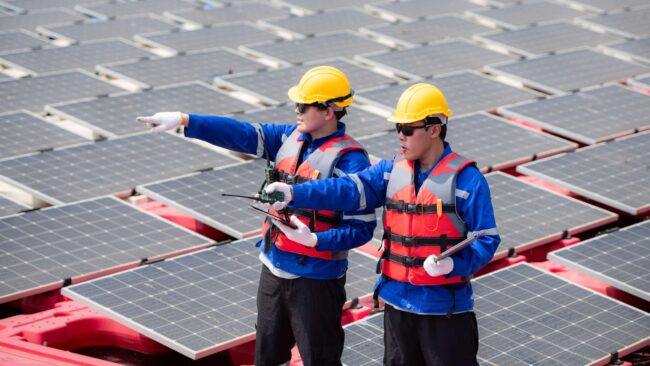
An alarming new report from Horizon Advisory details China’s distortion of the global solar industry and how that threatens the national and economic security of the United States as it “risks making the United States dependent, and dependent on an adversary, for a strategic, future energy source.”