
Wall Street’s Overblown Tariff Fears Not Based in Reality
Investors’ panic is misguided—history proves President Trump’s tariffs boost investment, jobs, and long-term American prosperity.



Investors’ panic is misguided—history proves President Trump’s tariffs boost investment, jobs, and long-term American prosperity.
Tariffs are an effective tool for boosting domestic production. They stimulate critical domestic investment and increase U.S. manufacturing capacity. It’s past time to abandon the outdated dogma of unregulated free trade — and start focusing on rebuilding American industry to create jobs and ensure long-term economic resilience.

Agriculture has long been a key part of Iowa’s economy. But the state is now facing escalating trouble, including the loss of more than 26,000 family farms since 1982.

The evidence is clear: neither tariffs nor the surge of imports from trade liberalization have had a significant effect on inflation, positive or negative.

The study confirms that even President Trump’s most substantial tariff increases have a minimal impact on inflation, leading to a small total cumulative price increase, likely spread out over several years.

It’s past time for Washington to implement a trade policy that rebuilds independence and prosperity for America’s domestic farmers and manufacturers.
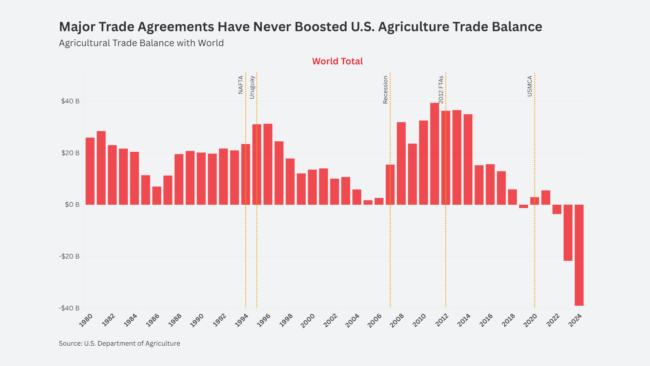
Decades of free trade agreements have led to a record $39 billion agricultural trade deficit in 2024, undermining the broader U.S. agricultural industry.
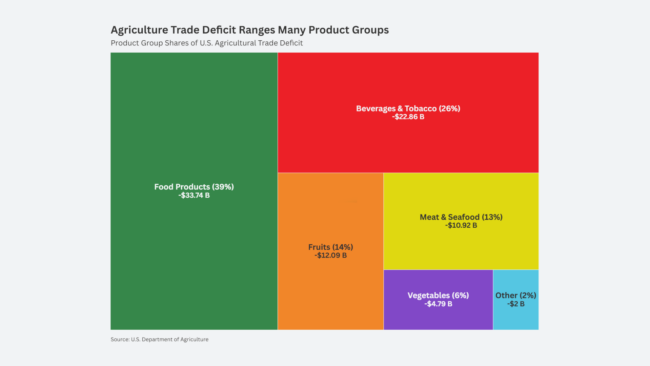
The United States is now on pace to reach a $39 billion agricultural trade deficit in 2024 amid all-time record imports.

The Congressional Budget Office’s (CBO) preliminary report on the impact of tariffs on the U.S. economy forecasts large benefits to the federal budget from tariffs and a tiny consumer price increase, confirming recent forecasts published by the Coalition for a Prosperous America.
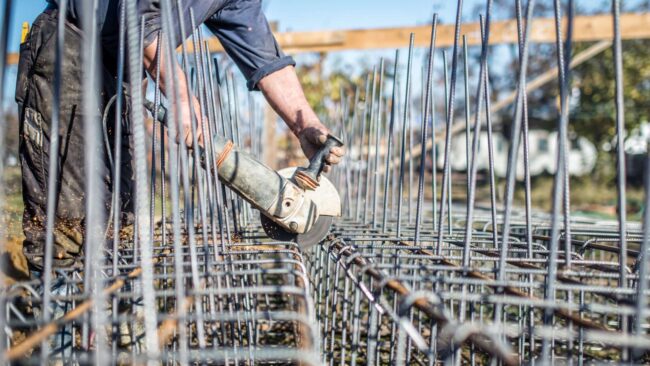
The continued influx of ever cheaper steel imports, particularly steel rebar and steel wire rod, is posing a serious threat to U.S. steel producers.