


Investment Underscores Need for 232 Tariffs Across the Full Solar Supply Chain
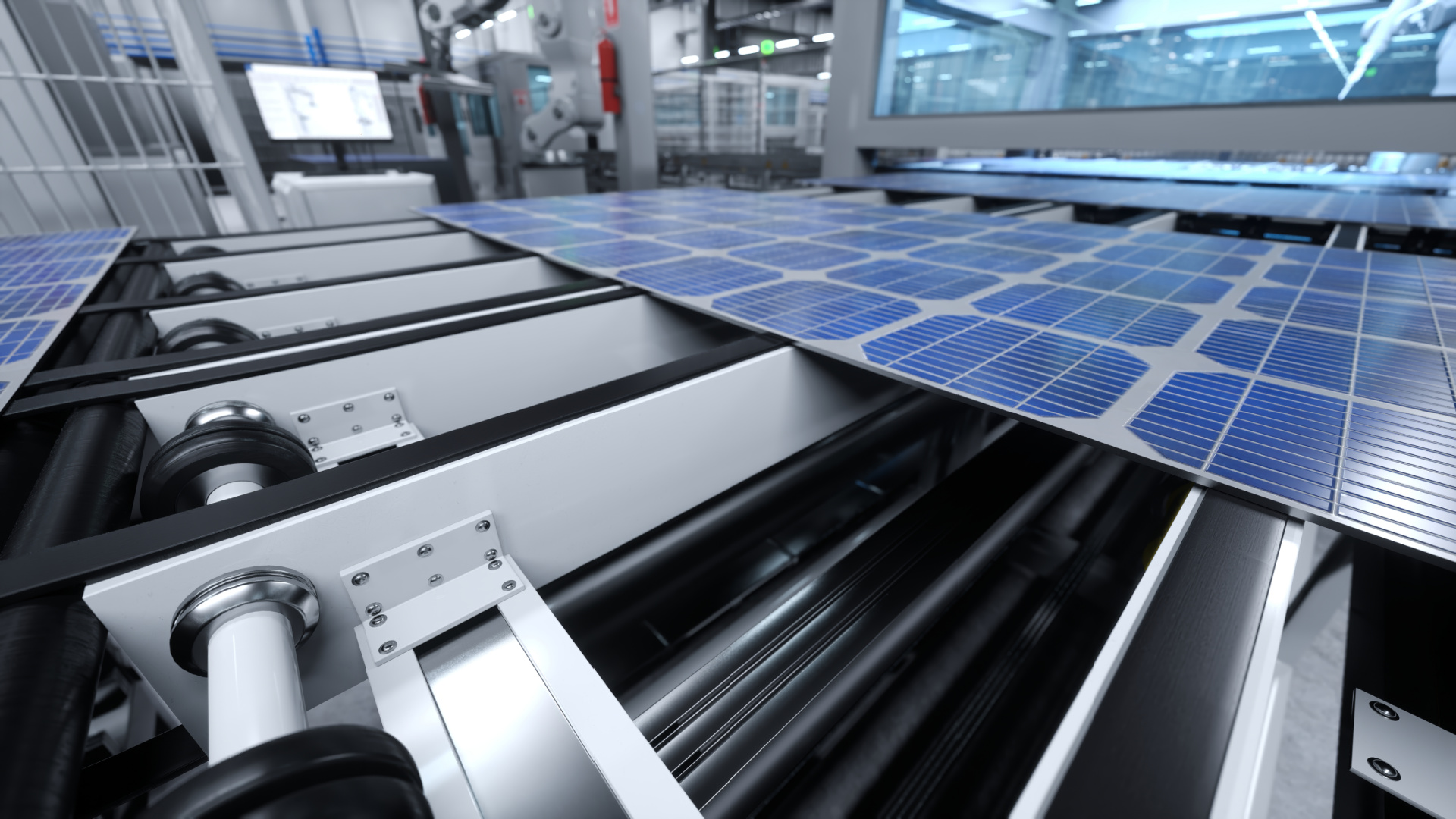
WASHINGTON, D.C. — The Coalition for a Prosperous America (CPA) today applauded Suniva’s announcement of a $350 million investment in a new state-of-the-art 620,000 square-foot solar cell manufacturing facility in Laurens County, South Carolina, which will create 564 new jobs and expand the company’s U.S. production capacity to over 5.5 GW annually.
Suniva’s expansion highlights the critical importance of rebuilding the domestic crystalline silicon photovoltaic (PV) supply chain—particularly solar cell manufacturing, one of the most strategically important segments of U.S. energy production. As electricity demand surges, driven in part by data centers and advanced computing, the United States must rapidly scale energy generation capacity. Solar is uniquely positioned to meet this demand, but doing so securely requires a fully domestic supply chain spanning polysilicon, ingots, wafers, cells, and modules.
“At this moment in history, the question of where our energy comes from — and who controls the supply chain that delivers it — is among the most consequential questions America faces. Suniva’s answer is straightforward: we build it here. With this expansion, Suniva contributes over 5.5GW of American-made solar cell capacity annually to a grid that increasingly depends on it. That’s not just good business. That’s a national imperative,” said Matt Card, President and COO, Suniva.
This is not just an energy issue—it is a national security imperative tied directly to the semiconductor industry. Solar-grade polysilicon is produced at scale and plays a critical role in sustaining the broader polysilicon ecosystem, including the ultra-high-purity polysilicon required for semiconductor manufacturing. Without strong domestic demand from solar manufacturing—particularly at the cell level—the United States risks undermining its semiconductor supply chain and increasing dependence on foreign producers.
The Trump administration’s ongoing Section 232 investigation into imports of polysilicon and its derivative products presents a critical opportunity to address these vulnerabilities. As a recent bipartisan letter from U.S. Senators Rick Scott (R-FL) and Tammy Baldwin (D-WI) underscored, any effective policy response must address the entire solar supply chain—from polysilicon to ingots, wafers, cells, and finished modules—rather than focusing on a single segment in isolation. Protecting polysilicon production alone, while allowing Chinese-controlled solar components to continue displacing U.S. wafer, cell, and module manufacturers, would leave the United States “dangerously dependent and vulnerable” to China.
To be effective, any action must cover the full solar supply chain. Isolated tariffs on polysilicon alone would risk driving production offshore by weakening downstream demand in the United States. Comprehensive, specific tariffs assessed by weight and volume across polysilicon, ingots, wafers, cells, and modules are necessary to incentivize both production and consumption of domestically manufactured inputs and to ensure that investments like Suniva’s are sustained and expanded.
“Suniva’s investment is exactly what a pro-domestic production policy is meant to achieve,” said Jon Toomey, President of CPA. “Building solar cell manufacturing capacity in the United States strengthens our energy security, supports high-quality American jobs, and reinforces the industrial base that underpins both our energy and semiconductor supply chains. The Trump administration now has an opportunity through the Section 232 polysilicon investigation to build on this momentum and ensure additional capital is deployed to develop the entire solar supply chain here in the United States.”
CPA has been a leading voice in advocating for a comprehensive approach to rebuilding the domestic solar manufacturing base. In its formal comments to the Department of Commerce on the Section 232 polysilicon investigation, CPA emphasized that maintaining a robust solar manufacturing ecosystem is essential to sustaining domestic polysilicon production. CPA has also highlighted the national security risks associated with foreign dominance in solar manufacturing and the importance of aligning energy policy with industrial strategy to ensure long-term U.S. competitiveness.
CPA will continue working with policymakers to advance a coordinated approach that supports domestic manufacturing across the full solar supply chain and ensures that investments like Suniva’s are the foundation of a durable American energy and industrial future.
# # #