This report shows in stark numbers what American patients and pharmacists already feel every day – our medicine cabinet has been hollowed out, and we are now dangerously dependent on a handful of foreign, sometimes even adversarial, countries for the drugs that keep people alive.
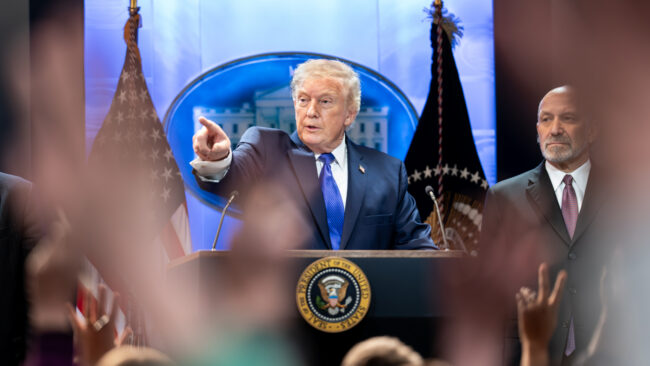
New duties on imports from dozens of countries take effect this week, closing the gap left after the Supreme Court struck down the President’s earlier tariff authority.
For years, the most critical link in our drug supply chain — the upstream chemistry — has been invisible to our own regulators. A medicine finished in Europe is not necessarily a European medicine, and this rule finally begins to expose that fiction.
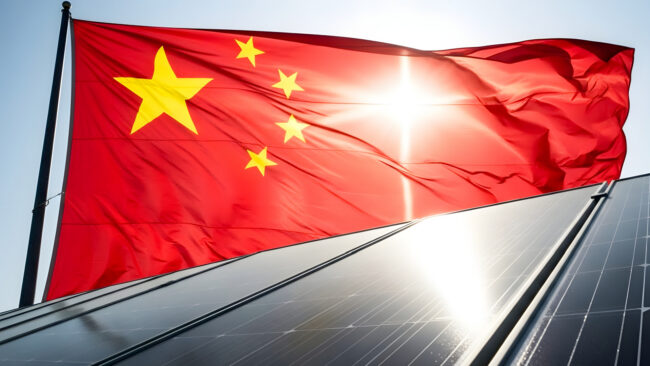
A new joint white paper finds that aluminum extrusion — the most capital-intensive step in frame production — must occur in the United States for solar module frames to qualify for the Section 45Y/48E domestic content bonus credit.
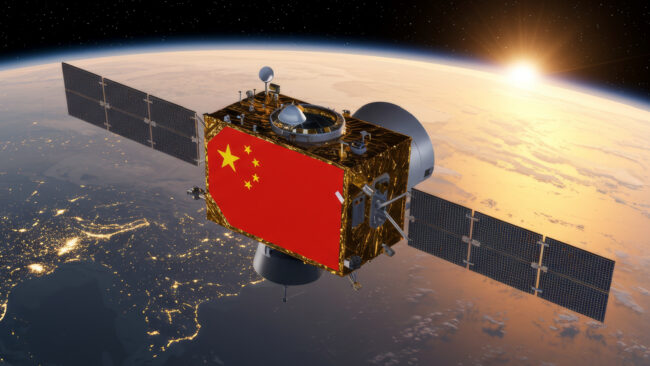
Coalition for a Prosperous America (CPA) and the Prague Security Studies Institute (PSSI) have released a joint report, U.S. Underwriting of Chinese Military Companies Operating in Latin America, which details how Beijing is working to penetrate and control the space sectors of Latin American countries through dozens of ostensibly commercial agreements concluded with its state-controlled Chinese space companies that, in effect, act as fronts for the People’s Liberation Army.
Years ago, CPA warned that China was using American clean-energy tax credits to capture our solar industry — and we led the fight to slam that door shut.
New bill protects American agricultural markets from further import displacement with inflation-indexed specific duties — assessed against volume, rather than declared value — as well as new tariff-rate quotas to stop further displacement towards imports and give farmers and ranchers certainty.
CPA welcomed the U.S. Department of War expanding its Section 1260H list of Chinese military companies and praised recent efforts by lawmakers, including Senator Rick Scott (R-FL), to draw greater attention to the threat posed by China’s military-civil fusion strategy.
For too long, foreign actors with no real U.S. presence have been able to import into the American market while shielding themselves from the duties, penalties, and laws that domestic producers and legitimate U.S. importers must obey. The order takes aim squarely at that imbalance.