War, AI, and Grid Stress: Why This Is Solar Power’s Moment
The war in Iran is solar power’s Covid moment.



The war in Iran is solar power’s Covid moment.
As the Congressional Budget Office (CBO) projects a $1.9 trillion federal deficit for fiscal year 2026, Congress is under increasing pressure to identify durable budget pay-fors. In most cases, that discussion quickly narrows to three familiar choices: raise domestic taxes, cut spending, or continue borrowing more. But tariffs warrant more serious consideration.

China holds a rapidly expanding position in the global biologics and biosimilars market, driven by heavy government support, regulatory reforms, and massive investments in biotech hubs like Shanghai and Suzhou.
Revoking PNTR for China would move Chinese imports onto an average effective Column 2 tariff rate of 38.9 percent, helping rebalance trade, restore domestic production capacity, and reduce strategic dependence on an increasingly adversarial economic system.

CPA welcomes new proposals from the Food and Drug Administration (FDA) aimed at rebuilding domestic generic drug manufacturing, strengthening oversight of foreign pharmaceutical production, and improving supply chain transparency.
The report finds that the CPA Domestic Market Share Index (DMSI) – which measures the share of U.S. demand served by domestic producers – rebounded in 2025 as Section 232 tariffs and other industrial policies began to reshape the competitive landscape for American industry.

If there is one Washington, D.C.-based organization that is outspoken against the positions of CPA, it’s the Tax Foundation. They have been instrumental in getting many legislators to believe tariffs would be a “tax” upwards of $1,000 per household.
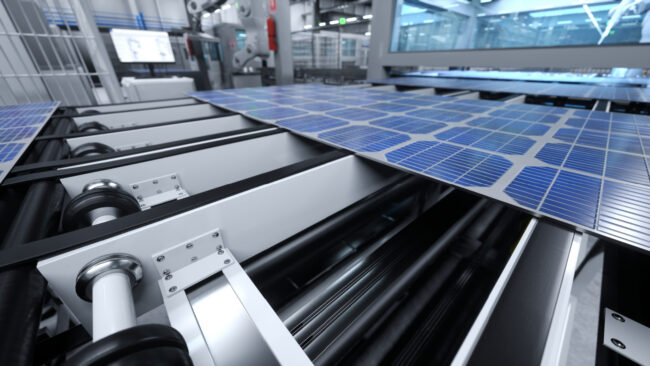
Suniva’s expansion highlights the critical importance of rebuilding the domestic crystalline silicon photovoltaic (PV) supply chain—particularly solar cell manufacturing, one of the most strategically important segments of U.S. energy production.
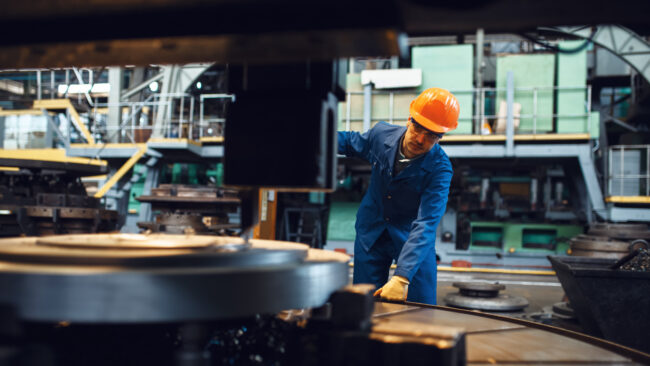
The CPA Domestic Market Share Index (DMSI) has rebounded sharply in 2025, signaling that U.S. tariffs are beginning to restore domestic production’s share of the American market.

The investment is clear evidence that U.S. trade policy is driving a resurgence in domestic production and job creation. This new investment underscores Whirlpool Corp.’s long-standing commitment to the U.S. market and creating high-quality American jobs.