President Trump has already made the most important deal of his life—his promise to the American people to end U.S. dependence on China and rebuild our domestic industrial capacity.
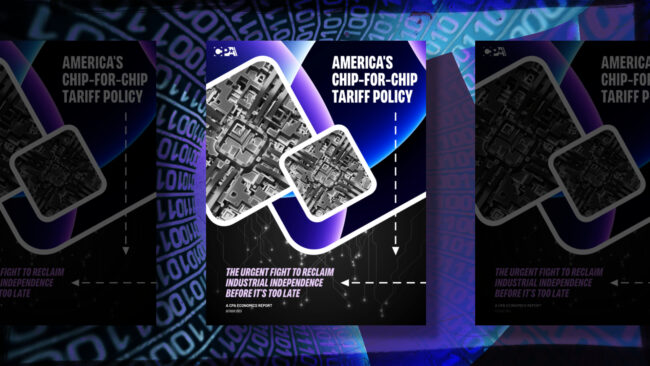
The report, titled “America’s Chip-for-Chip Tariff Policy: The Urgent Fight to Reclaim Industrial Independence Before It’s Too Late,” finds that the United States now produces only 10 percent of the world’s chips—and almost none of the most advanced ones—while China has captured the majority of global capacity for legacy chips, the mature semiconductors essential to cars, medical devices, and industrial equipment.
On the surface, America looks like an unrivaled success story. Yet beneath the headline numbers lies an economy increasingly dependent on foreign production, hollowed out in critical industries, and unable to provide secure, high-wage work for many of its citizens.
The Trump administration’s section 232 investigation into medical devices and personal protective equipment is a vital step toward ensuring America takes back control over its production and domestic supply of critical medical products.
The hearing continued the committee’s efforts to examine and reduce America’s severely dangerous over-dependence on foreign-manufactured generic drugs and address vulnerabilities in the nation’s pharmaceutical supply chain.
Move seen as a critical step to protect U.S. manufacturing, American jobs, and national security WASHINGTON, D.C. — The Coalition for a Prosperous America (CPA)
Data centers powering AI need copper wiring and transformers. EVs use nearly four times more copper than gas-powered cars. Wind turbines, solar farms and the modern electric grid all depend on it. As such, copper is a building block of tomorrow’s economy and the backbone of America’s national security.
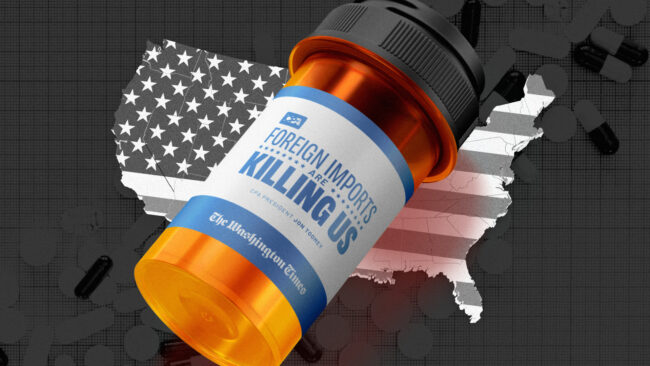
The United States has become incredibly dependent on imports to meet its daily pharmaceutical needs. This heavy reliance on imports is now creating serious drug shortages and has led to a flurry of safety concerns.
In response to market manipulation driven by companies in Indonesia, Laos, and India, the petitions were filed by The Alliance for American Solar Manufacturing and Trade.