Today’s action to directly target the midstream layer—rods, pipes, wires, connectors, and other semi-finished copper products that are essential to our economy and national security is extremely welcome. Combining the Section 232 action with the use of the Defense Production Act to ensure a robust supply of copper scrap for recycling is extraordinary.
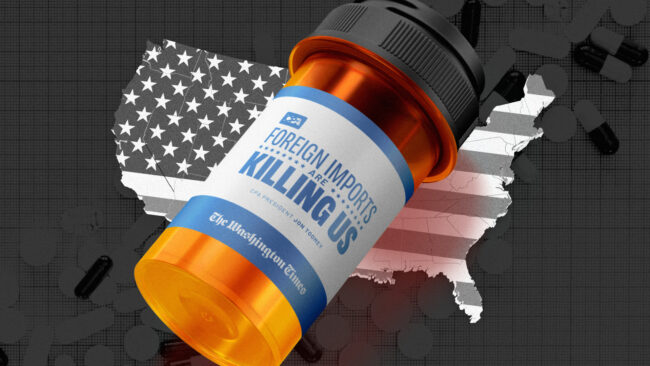
The United States has become incredibly dependent on imports to meet its daily pharmaceutical needs. This heavy reliance on imports is now creating serious drug shortages and has led to a flurry of safety concerns.
CPA submitted formal comments to the Federal Communications Commission (FCC) this week supporting its proposed rule to increase transparency regarding foreign adversary control of smart devices and appliances.
Realigning the dollar would be the most comprehensive and effective move to address the U.S. competitive disadvantage. It can be done either by a multilateral intervention agreement, or a MAC, which would be a federal tool to moderate foreign investment in dollar financial assets.
In response to market manipulation driven by companies in Indonesia, Laos, and India, the petitions were filed by The Alliance for American Solar Manufacturing and Trade.
The Senate’s decision to remove the FEOC Excise Tax and weaken FEOC restrictions is a blatant giveaway to the Chinese Communist Party’s solar industry.
Any Senator who supports an amendment to remove or weaken the FEOC Excise Tax is directly endorsing China’s solar industry—dominated by companies using slave labor, powered by coal, and compromised by severe cybersecurity risks.
CPA strongly endorses the FEOC Excise Tax in the Senate reconciliation bill as a critical step in protecting America’s solar manufacturing industry from reliance on subsidized and compromised Chinese components.
CPA warned that the Senate version of President Trump’s reconciliation bill—known as the One Big Beautiful Bill—contains a critical loophole in both the Section 48E investment tax credit and 45Y production tax credit in the Inflation Reduction Act (IRA), creating an unintended but dangerous giveaway to China’s solar industry.