


Nearly one in four U.S. internet households owns a smart appliance, yet no federal agency has publicly assessed how many of those devices come from Chinese-owned manufacturers or what those companies can control remotely.
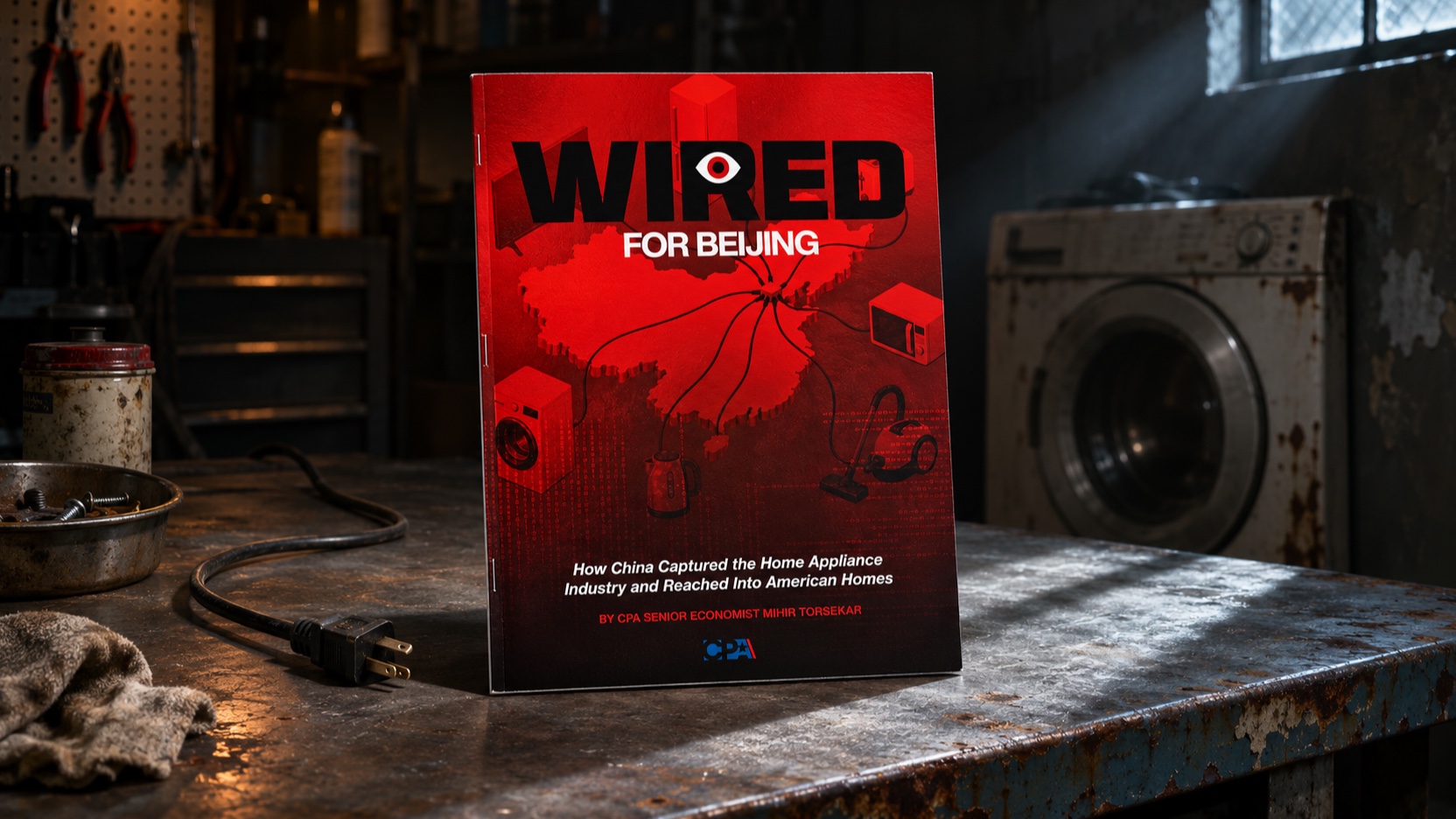
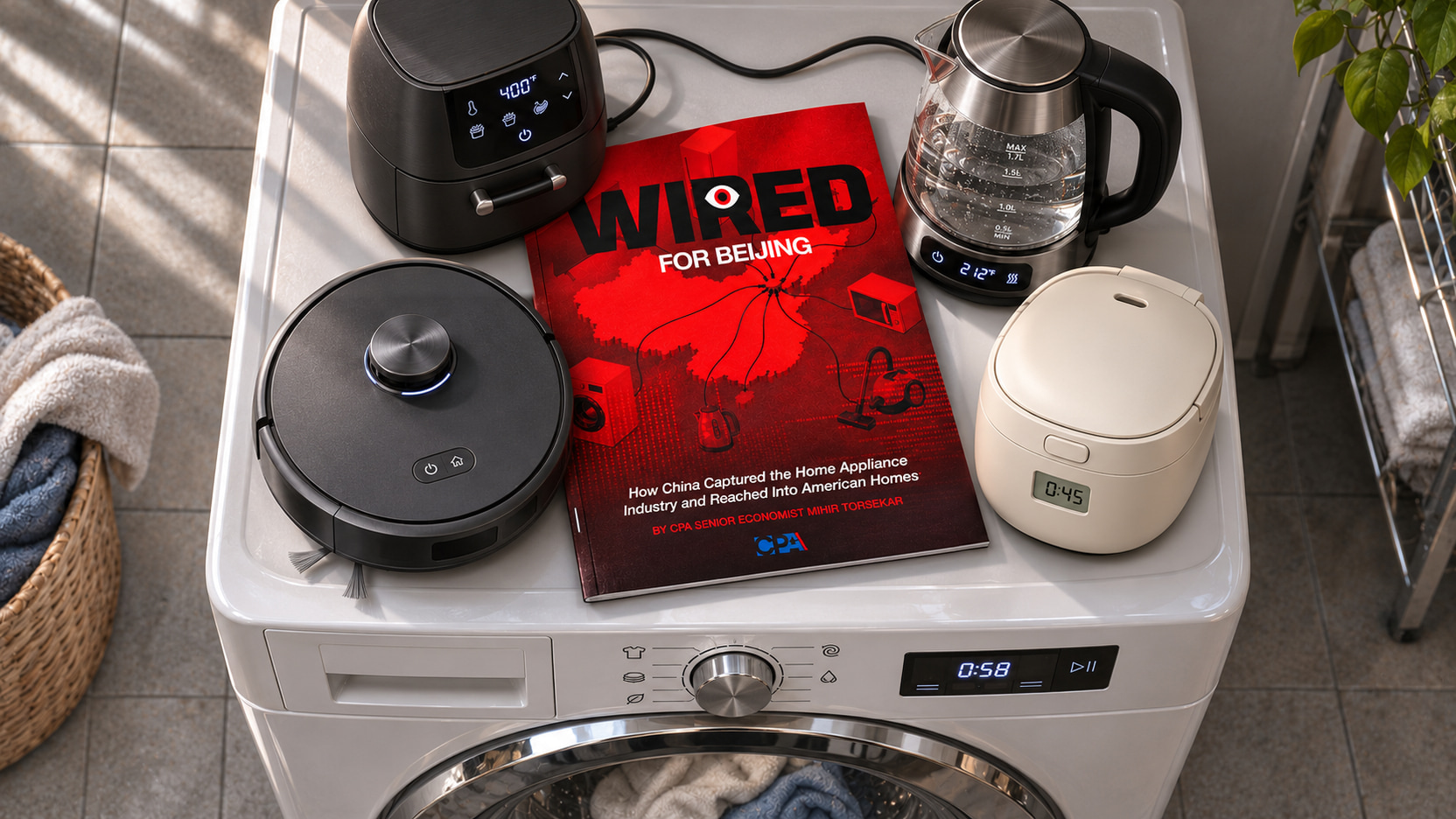
WASHINGTON, D.C. – The Coalition for a Prosperous America (CPA) today released Wired for Beijing: How China Captured the Home Appliance Industry and Reached Into American Homes, a new report by CPA Senior Economist Mihir Torsekar documenting how Beijing used state subsidies and state-financed acquisitions to capture the global home appliance industry and how smart appliances from Chinese-controlled companies now sit inside American homes, potentially placing the data those devices generate within the legal reach of China’s intelligence authorities. CPA is calling on the Cybersecurity and Infrastructure Security Agency (CISA) to assess the national security risks posed by connected appliances from Chinese-owned manufacturers and on the Commerce Department to open an investigation into the electrical grid vulnerabilities posed by foreign adversary controlled technology.
When Haier bought GE Appliances in 2016, the name on the refrigerator stayed the same. State-owned China Development Bank backed 60% of the $5.6 billion purchase, which gave Haier the right to use the GE name on appliances for up to 40 years. GE Appliances says it stores its connected-appliance data on U.S. servers, bars access from China, and does not share those data with Haier. But those protections are company-administered, and China’s National Intelligence Law applies to Haier, the parent company. The report does not allege that GE Appliances has transferred American consumer data to Chinese authorities. It calls for independent verification of those safeguards.
“Beijing subsidized its way to dominance of the global appliance industry, and helped Chinese companies buy up Western brands. Now their hardware sits inside American homes,” said Jon Toomey, President of CPA. “Washington already restricts Chinese technology in our cars and telecom networks, yet no federal agency has assessed the refrigerators, washers, and air conditioners wired into our homes and our power grid. That is a national security blind spot, and the administration has the authority to close it today.”
Torsekar documents how state subsidies financed factory expansion and overseas acquisitions, how manufacturers moved production as tariffs took effect, and how Chinese companies gained influence over the technical standards for connected appliances. Key findings include:
- U.S. household appliance manufacturing employment has fallen by half, from 113,500 in 1990 to 57,200 in 2025, while the U.S. appliance trade deficit grew eleven-fold, from $2.9 billion in 2000 to $31.2 billion in 2024.
- China reached 60% to 70% of global appliance production capacity by 2021. In 2024, it exported $112.4 billion in appliances against just $3.26 billion in imports, and the United States is its largest single-country market.
- More than 99% of 5,260 listed Chinese firms received direct government subsidies in 2022. Midea, Haier Smart Home, and Gree each reported between roughly RMB 1.7 billion and RMB 3.3 billion in government grants and related tax benefits in 2024.
- Article 7 of China’s National Intelligence Law obligates all Chinese organizations and citizens to “support, assist, and cooperate with national intelligence efforts,” and its text contains no exception for data held abroad. The report treats that exposure as a national security question warranting investigation, not as evidence that any access has occurred.
- Federal rules already reach telecommunications equipment and connected vehicles, while connected refrigerators, HVAC systems, and washing machines go unreviewed.
Appliances are the warning. The same playbook of subsidized overcapacity and state-backed expansion has already run its course in solar, is far advanced in steel and shipbuilding, and is unfolding in electric vehicles. Torsekar’s 2025 report, How Managed Trade Can Stop the Next China Shock, documented how Chinese industrial overcapacity spreads across sectors and made the case for tariffs or quotas in strategic industries.
The 2018 global washer safeguard proves that comprehensive tariff relief rebuilds American production. As the safeguard took shape, Samsung invested $380 million in Newberry, South Carolina, and LG invested $360 million in Clarksville, Tennessee. CPA’s 2024 study of the washer tariffs documented more than 2,000 new jobs at the two plants, and covered imports fell more than 90% by 2022. The safeguard expired in February 2023, and the imports came back: the new report finds that U.S. imports of large residential washers rose 88% between 2022 and 2025.
Torsekar writes in the report, “The washer safeguard demonstrated that decisive, comprehensive relief can rebuild American production within a single investment cycle. Washington must act while that is still true.”
Alongside the security assessment, CPA urges federal agencies to inventory these devices and use procurement rules to restrict Chinese-controlled connected appliances in federal buildings and military housing. CPA also urges Congress to mandate investment reviews for Chinese acquisitions of consumer businesses with connected products or large holdings of sensitive data. On trade, the report calls on Commerce to self-initiate antidumping and countervailing duty investigations and enforce the anti-circumvention statute.
“A family shopping for a refrigerator can compare energy costs right on the showroom floor. It should be just as easy to find out where a connected model sends household data and who can control it remotely,” Toomey added. “Washington can start with the appliances it buys for federal buildings and military housing and require suppliers to prove who controls that access.”
# # #