



WASHINGTON, D.C. — The Coalition for a Prosperous America (CPA) today publicly released comments it submitted last week to the Department of Commerce for its Section 232 National Security Investigation of ‘Imports of Personal Protective Equipment, Medical Consumables, and Medical Equipment, Including Devices.’ CPA asserts in its comments that the high import reliance on products covered by this investigation’s scope presents a clear national security risk—as demonstrated in the response by national governments worldwide since the crisis caused by COVID-19.
The pandemic exposed how dangerously dependent the United States has become on foreign sources for even the simplest, yet critical, personal protective equipment. That vulnerability remains, and without decisive action, the next crisis—whether medical, industrial, or geopolitical—will again find U.S. hospitals and defense facilities remaining reliant on overseas suppliers.
“Foreign adversaries with little to no concern for the American patient, continue to exert themselves as the dominant force over the entire American health care supply chain. This is a direct and growing threat to not only our health, but also our economic and national security,” said Jon Toomey, President of CPA. “The Trump administration’s 232 investigation into medical devices and personal protective equipment is a vital step toward ensuring America takes back control over its production and domestic supply of critical medical products. In our submitted comments, CPA put forth clear recommendations to help erase our dangerous dependence on foreign nations, restore control over our ability to care for American patients, and protect the health of our citizens.”
CPA’s submission focuses on two critical manufacturing and supply sectors, including medical gloves and syringes.
From the CPA Filing on Medical Gloves:
The United States remains almost entirely dependent on foreign suppliers for nitrile medical gloves – a foundational product for health care, pharmaceuticals, and defense. About 99 percent of medical gloves used in America are imported, and the upstream nitrile-butadiene rubber (NBR) feedstock from which nitrile gloves are made is dominated by China. Together, these vulnerabilities represent a critical national security threat under Section 232 of the Trade Expansion Act.
Beijing’s “China-Plus-One” strategy has moved production to affiliates in Malaysia, Vietnam, and Thailand, creating the illusion of diversification while keeping Chinese control over pricing and raw materials. Malaysia now produces about 60 percent of U.S. medical gloves but relies on Chinese feedstock—proof that the supply chain remains tethered to Beijing’s grip.
To restore a secure domestic supply chain, CPA believes that the Department of Commerce should impose a combined tariff of $0.045 per glove, plus a 150% ad valorem rate on imported nitrile gloves, and a corresponding duty of $15 per kilogram on imported NBR feedstock. These duties, applied indefinitely with five-year reviews, would stabilize prices, spur U.S. investment, and signal America’s resolve to rebuild its own production base. Restoring America’s ability to make its own medical gloves is not simply an industrial goal but a strategic necessity—ensuring a stable, secure, and resilient supply of this critical healthcare product.
From the CPA Filing on Syringes:
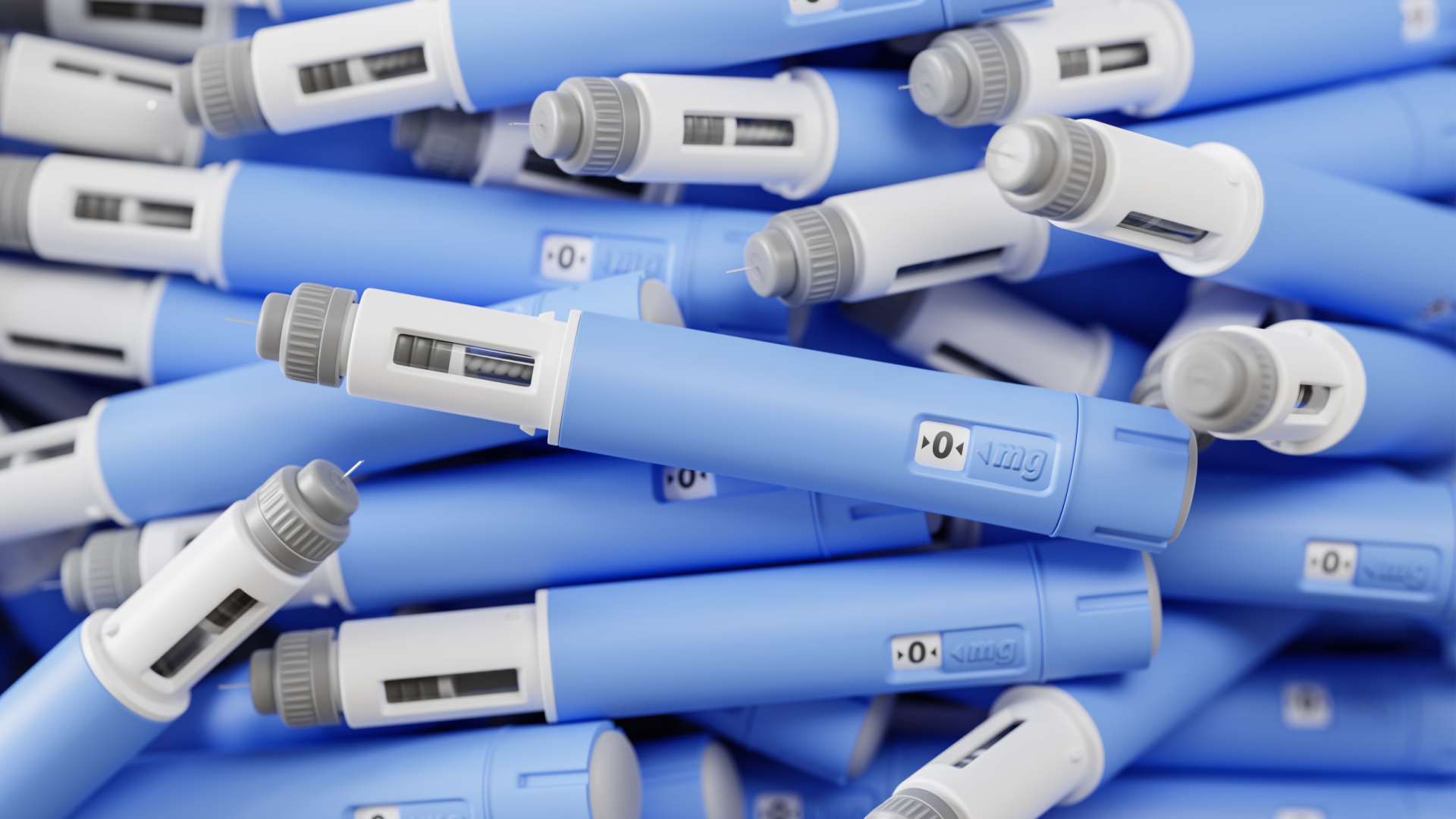
The United States has developed an extreme overreliance on imported medical syringes. This dependency – dominated by low-priced imports from the People’s Republic of China (PRC) – represents a critical vulnerability in the nation’s health care and defense supply chain. In 2024, China accounted for approximately 60 percent of total U.S. syringe import volume, but only 10 percent of import value. CPA supports decisive action under Section 232 of the Trade Expansion Act to address the growing national security threat posed by this overreliance on foreign imports.
CPA urges the Department of Commerce to find that syringe imports threaten to impair the national security of the United States and to recommend the imposition of a specific per-unit tariff on Chinese-origin syringes equal to 100% × the average landed cost per syringe. This we conservatively estimate at $0.58/ unit, which is based off the weighted average landed cost across all countries. This measure would neutralize China’s 90% artificial cost advantage and restore fair market conditions; it would prevent circumvention through under-invoicing or falsified customs values; and, it would stabilize the U.S. market and support new domestic investment.
To secure long-term leadership in medical technology, CPA recommends policies that prioritize domestic strength and U.S.-controlled operations, while leveraging North American cross-border partnerships like USMCA to enhance competitiveness. As such, trusted partners (e.g. Canada, Mexico, Japan, and the EU) should be excluded from this tariff. At the same time, we urge the Administration to ensure China cannot exploit USMCA rules of origin or maquiladora processing to re-enter the U.S. market duty-free through transshipment or component assembly in Mexico.
CPA’s Filing Urges the Bureau of Industry and Security (BIS) to:
The Department of Commerce should determine that imports of personal protective equipment, medical consumables, medical equipment and medical device imports threaten to impair U.S. national security, and recommend immediate implementation of the tariffs described by CPA to help restore self-reliance across the full nitrile-glove supply, and the medical syringe supply chains.
In tandem with these tariffs, complementary measures such as stronger enforcement, long-term federal purchase commitments, strategic stockpiling, and domestic procurement preferences, will be essential to sustain U.S. production and prevent a repeat of pandemic-era shortages.
Meanwhile, Commerce should establish a formalized product-by-product inclusion process – to allow future tariff additions or rate adjustments to address changing predatory pricing and dumping. Complementary measures should then follow, such as strategic procurement and stockpiling, subsidy monitoring, and import quotas. When taken together, such measures will help rebuild U.S. self-sufficiency and insulate American health care from foreign coercion.
The Coalition for a Prosperous America fully supports the administration’s investigation into imports of personal protective equipment, medical consumables, and medical equipment, including devices, and advises it to act swiftly in implementing the findings of this investigation. CPA respectfully requests that the Department of Commerce recommends to President Trump these remedies we have outlined in our formally submitted comments. – Taken together, these measures represent a restoration of the nation’s capacity to defend its sovereignty in the face of economic coercion and to care for its own citizens in times of crisis.
# # #